
Paul Stamets Rare UK Talk
A Night at Equinox 2024 That Changed How I See Fungi. (Note - this post links to my reviews of my favourite UK supplements)
Lloyd Jones
7/22/20265 min read
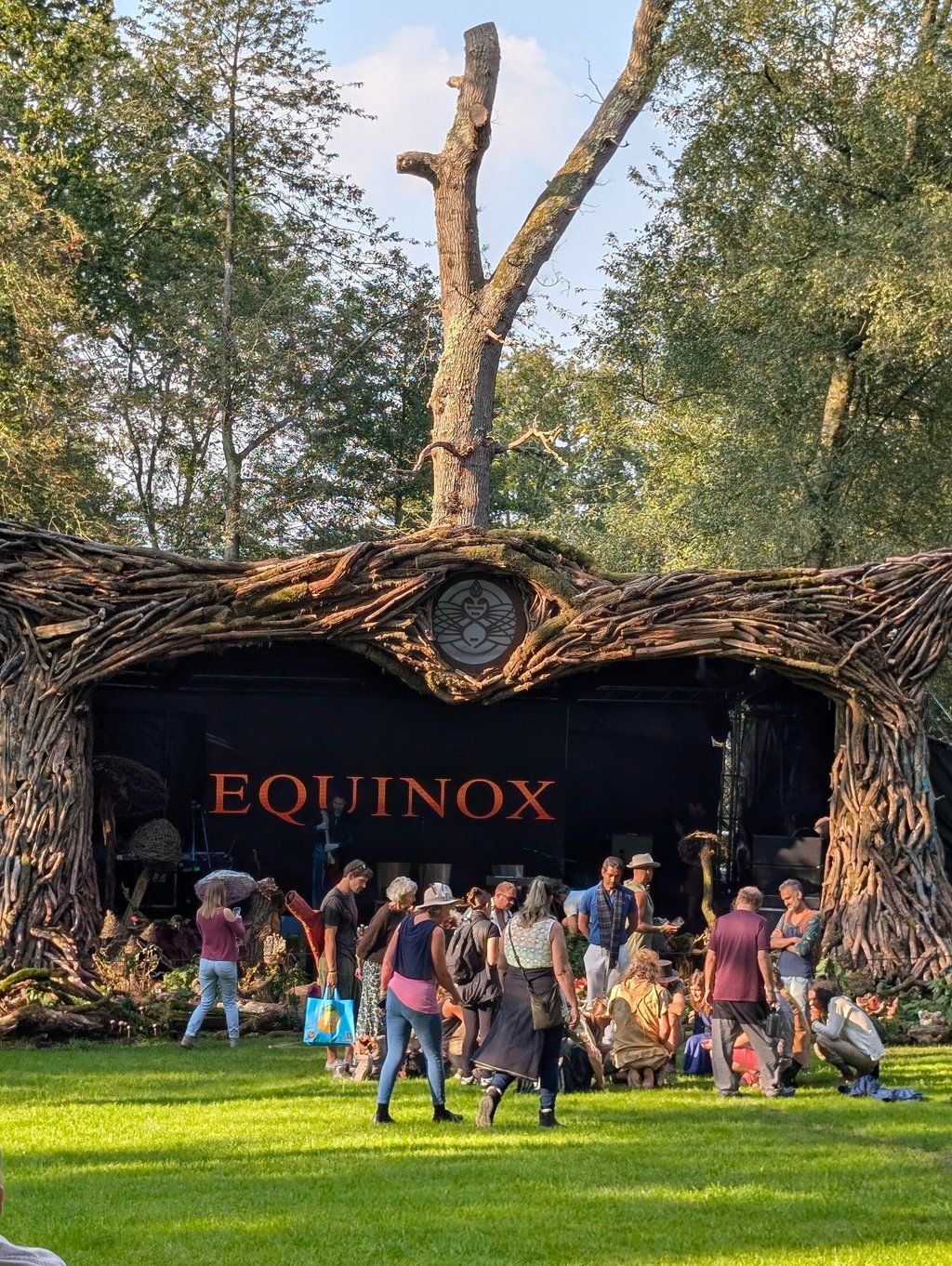
It was September '24, and my friend Adam had heard that Paul Stamets was soon to be speaking at a festival called Equinox at Wasing Estate in Berkshire. It was a rare UK talk from the world-famous mycologist, and the plan to go came together faster than the sense check did.
We drove up from Weymouth, stopped for a McDonald's somewhere on the A31 heading out of Dorset (as you do on an almost 100-mile drive), and arrived not really knowing what to expect from a festival built almost entirely around fungi.
By the time we'd parked up and walked in, I knew this wasn't going to be a normal day out.
Walking Into Something Different
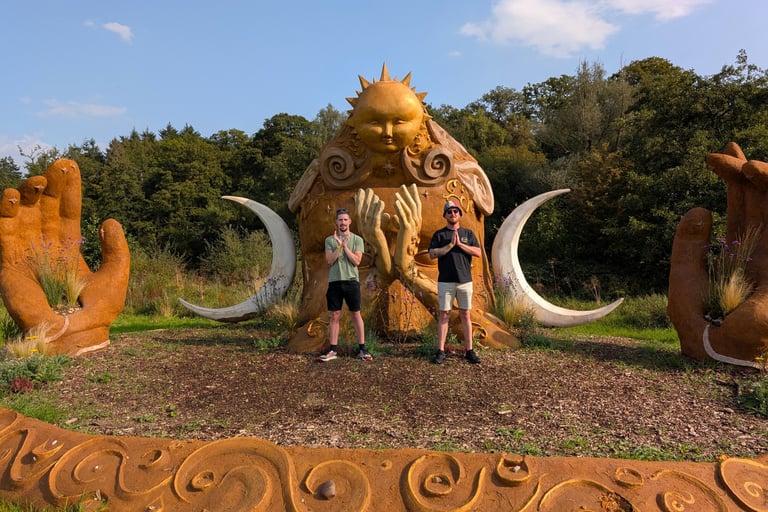
The whole site was unlike anything I'd been to before. Sculptures everywhere, a huge sun and moon figure with outstretched hands that Adam and I stood beneath for a photo op... life imitating art.
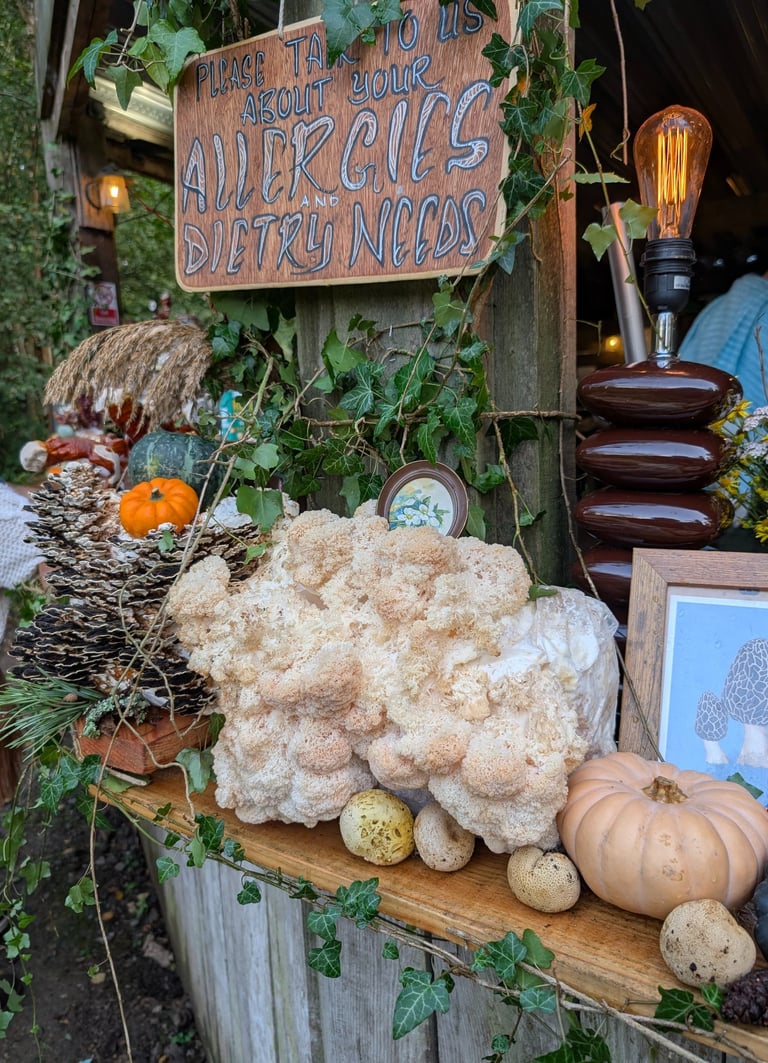
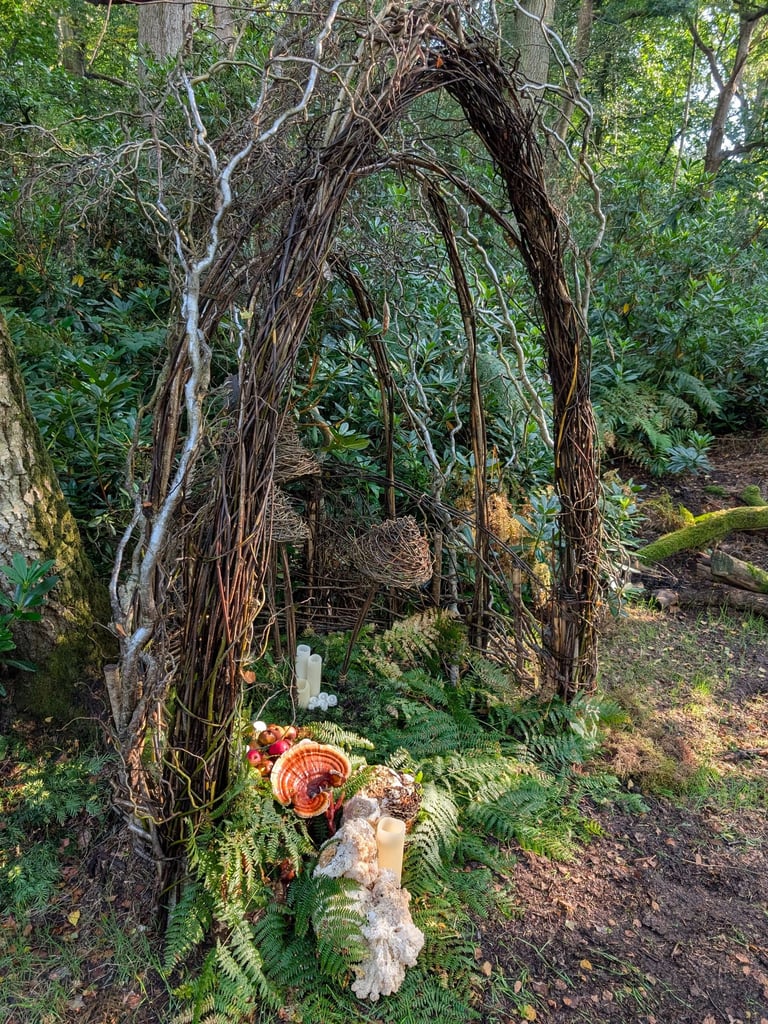
Willow archways woven into the trees. Altars built from moss, candles, and real fungi laid out like offerings. Vibrant specimens of Lion's Mane and Reishi were arranged with more care than most galleries give their exhibits.
The market stalls were the real surprise. The café had a beautiful display of fungal specimens, surrounded by pumpkins and mushroom prints scattered across the decoration. Right on the counter, alongside the menus, was a striking display of wild Turkey Tail.
I ordered a cordyceps coffee from there—earthy, slightly more grounding than a normal coffee, and right up my street. Coffee is my favourite addiction and early morning ritual, so finding one laced with mushrooms felt like a perfect fit after a long drive.
It was at one of these stalls that I got talking with Tom Baxter, founder of Bristol Fungarium. I knew more than the average Joe about mushrooms by that point, but Chaga was still a relatively unknown entity to me. Tom shared his wealth of knowledge on the subject.
He explained that Chaga thrives specifically on birch trees in cold northern climates. It's not the kind of thing you'll stumble across in Dorset woodland, but a creature of harsher, colder forests. What struck me most was how little it resembles a typical mushroom at all. Rather than a cap and stem, Chaga forms a charcoal-like, cracked mass on the outside of the tree. Something you could easily mistake for a burl or just a diseased patch of bark if you didn't know better. Tom also talked about its exceptionally high antioxidant content, among the highest of any fungus studied. It's one of those species that looks like nothing, but turns out to be remarkable.
Then The Stage Went Dark
As the evening drew in, word went round that Paul Stamets was preparing to speak. We made our way toward the main stage — itself an extraordinary structure woven from branches and moss, with a fire kept carefully burning at the front by an attendant whose entire job seemed to be making sure hundreds of people and an open flame coexisted safely. Mushroom sculptures lined the stage edges, and we managed to get a place right on the front row.
The cold, damp ground didn’t deter us. While others sat on their coats and jumpers, I made use of the sturdy paper cone salvaged from my dinner. It contained Jhalmuri—a vibrant, crunchy serving of India’s iconic street food, made with mesmerising skill by Angus Denoon. Now, there is a man who has truly mastered his craft!
The talk of the evening was titled "Psilocybin Mushrooms in Their Natural Habitats"
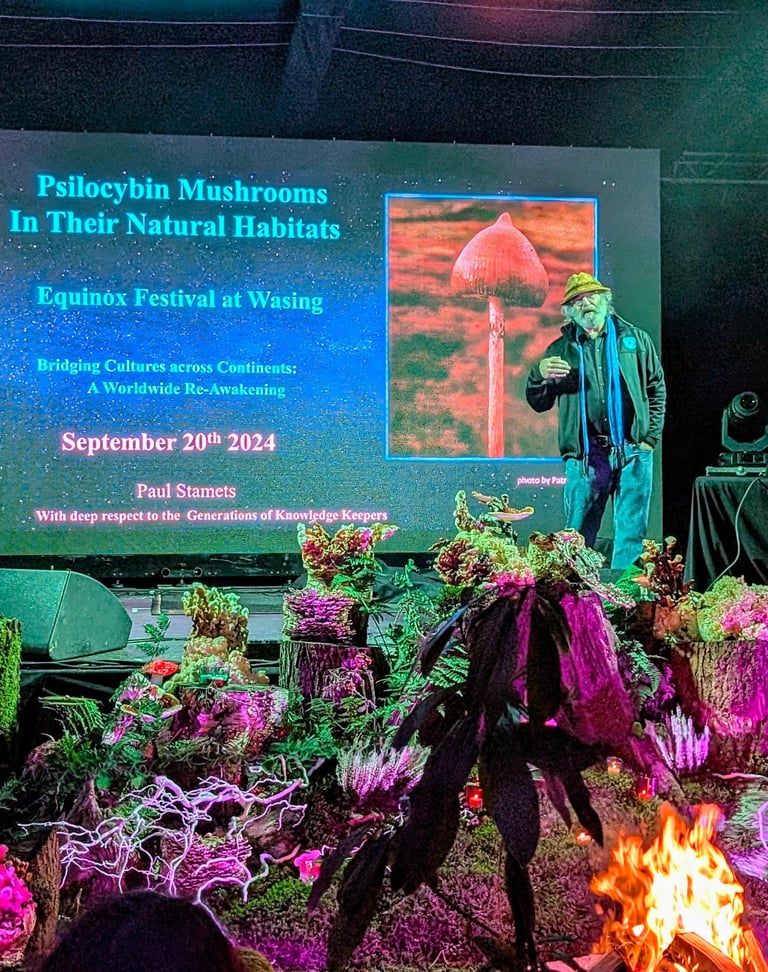
Stamets opened by grounding the whole talk in respect for the generations of ancient knowledge keepers who understood these fungi long before modern science caught up.
One image has stuck with me since that night more than anything else. Stamets put up a slide comparing brain scans under three conditions: psilocybin, the ADHD medication Ritalin, and ordinary day-to-day variability with no intervention at all. The psilocybin brain was lit up red — dramatically, visibly more changed than either of the other two. He explained that psilocybin massively disrupts functional connectivity in the brain, causing more than three times the change you'd see from methylphenidate.
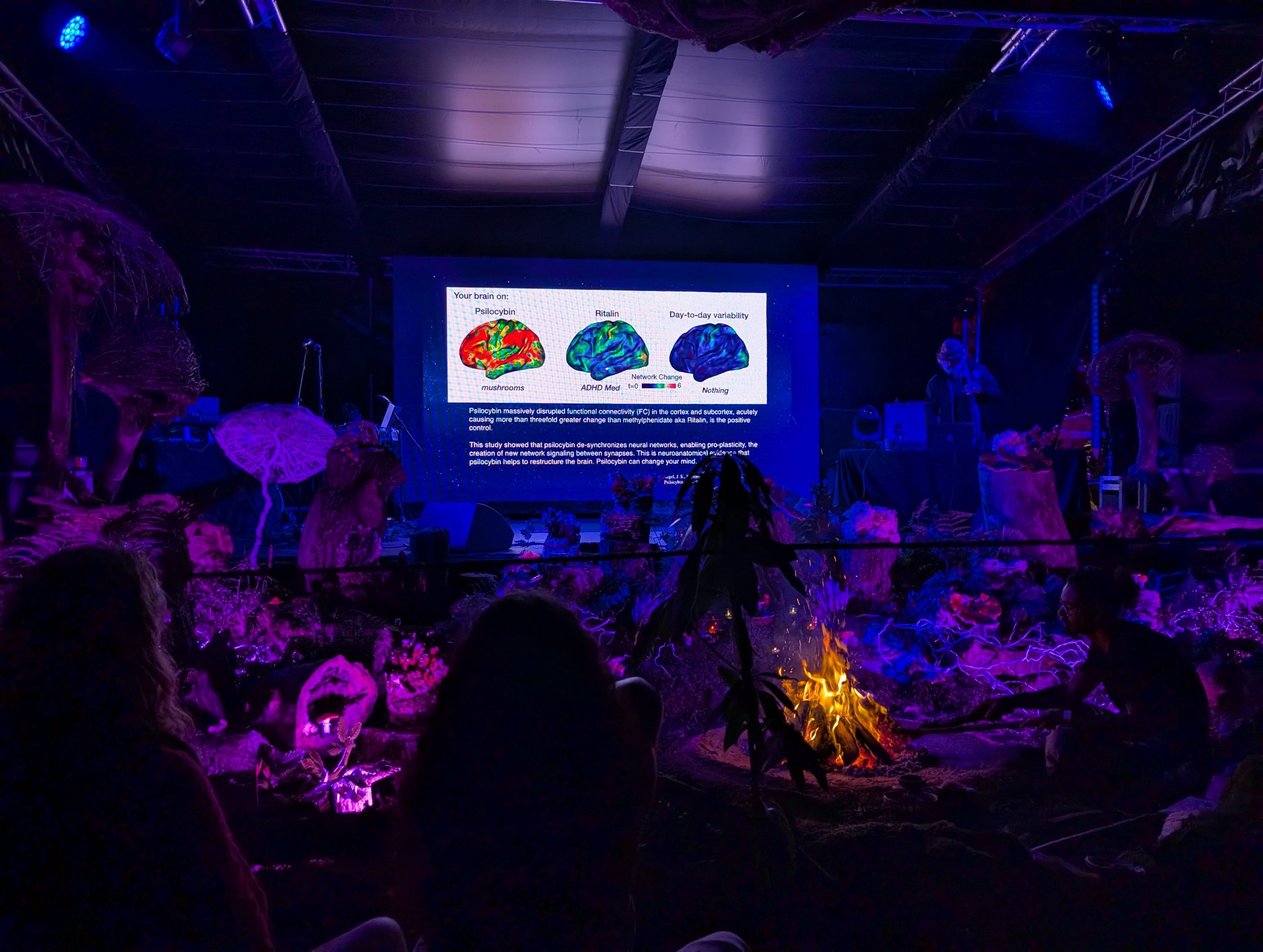
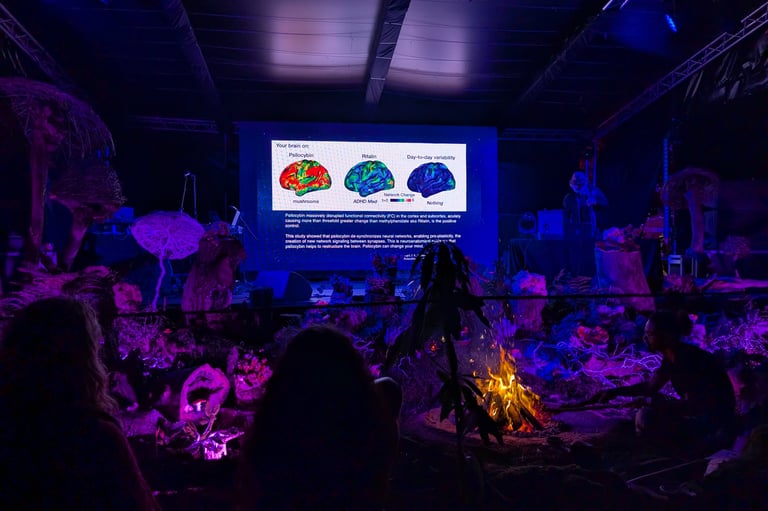
The point he was making was simple but powerful: this isn't subtle. This is neuroanatomical evidence that psilocybin genuinely restructures how the brain communicates with itself, creating the kind of plasticity that researchers believe underlies its therapeutic potential.
Standing in a crowd of people who'd travelled from all over the Country, watching a slide of two brains lit up in completely different colours, it was hard not to feel like something significant was happening in this field — not in some distant future, but actively, in published research, right now.
The Bigger Picture — Beyond Psilocybin
What I appreciated most about the talk wasn't just the psilocybin research, fascinating as it was. It was the way Stamets wove in his decades of work on fungi doing things that have nothing to do with altered states of consciousness at all.
His research into oyster mushrooms and mycoremediation is genuinely some of the most quietly remarkable environmental science I've come across. Back in 1998, Stamets collaborated with Battelle Laboratories to test mushroom strains for their ability to digest petroleum hydrocarbons. The results were extraordinary: in one trial, oyster mushroom mycelium reduced toxic hydrocarbon contamination in the soil from 10,000 parts per million down to less than 200 over sixteen weeks. The remediated soil was clean enough to meet environmental standards for use in highway landscaping. The very same fungus you might fry in butter for dinner can literally dismantle oil spills.
That’s what fascinates me most about mushrooms. They are incredibly versatile organisms; the results you get completely depend on the questions you choose to ask.
Why This Matters
There's still a lingering stigma around fungi in this Country (particularly anything in the same conversation as psilocybin) that feels increasingly out of step with where the actual research has moved. What I took away from that night wasn't an endorsement of any particular substance or practice. It was a reminder that we are in the middle of a genuine renaissance in mycological research, and most people have no idea how far it's already come.
Sitting in a field in Berkshire watching brain scans projected twenty feet high, surrounded by people who'd travelled hours to listen to a 69-year-old mycologist talk about fungi for ninety minutes — that's not a niche interest anymore. That's a field catching up to what indigenous knowledge keepers and obsessive growers have understood for a long time.
We finished the night the way you finish most festival nights — bad lighting, good pizza, and a slightly dazed feeling that we'd just witnessed something we'd be thinking about for a long time after.
We were right.
Lloyd is the founder of Fortress Fungi Ltd, a Dorset based fungi company incorporated in 2024. He has grown many varieties of mushroom, foraged wild fungi across the UK, and researched medicinal mushroom applications for several years.
Explore
Follow us on social media to get the latest news and exclusive content.
Support
Fortress Fungi Ltd © 2024.
All rights reserved.